

NAC (N-Acetyl-L-Cysteine): What It Is, How It Works, and Who Uses It
NAC — N-Acetyl-L-Cysteine — occupies an unusual position in the supplement world. It has a serious, well-established clinical track record: it's been used in hospitals for decades as the standard treatment for paracetamol overdose, and as a mucolytic agent in respiratory medicine. It also has a growing body of research behind it in the context of antioxidant support, liver health, and more recently, mental health.
That dual identity — pharmaceutical-grade clinical use alongside consumer supplement use — makes it one of the more substantively interesting compounds in the amino acid category. It also means the evidence base is considerably more developed than for most supplements.
This article explains what NAC is, how it works, what the research supports, and what you need to know before taking it.
What Is NAC?
N-Acetyl-L-Cysteine is a modified, more stable form of the amino acid L-Cysteine. Cysteine is a sulphur-containing amino acid — one of the building blocks of protein — that the body can synthesise from other amino acids, though dietary intake and supplementation can raise levels beyond what the body produces on its own.
The "N-Acetyl" part refers to an acetyl group added to the cysteine molecule. This modification makes NAC significantly more stable and bioavailable than plain L-Cysteine — it survives digestion more effectively and is absorbed more reliably, which is why NAC is the preferred supplemental form.
NAC contains sulphur. When you open a bottle of NAC capsules, you'll notice a characteristic sulphur smell — sometimes described as egg-like. This is completely normal and is not a sign of poor quality or spoilage. It's an inherent property of the compound. Worth knowing before you open the bottle for the first time.
The Glutathione Connection — Why NAC Matters
To understand why NAC is taken as a supplement, you need to understand glutathione.
Glutathione is often described as the body's master antioxidant. It's a tripeptide — a small protein made from three amino acids: glutamine, glycine, and cysteine. It's produced in virtually every cell in the body and plays a central role in neutralising free radicals, supporting detoxification in the liver, and maintaining the function of other antioxidants including vitamins C and E.
The limiting factor in glutathione synthesis is usually cysteine. Of the three amino acids required, cysteine is the one that's most likely to be in short supply — particularly under conditions of oxidative stress, illness, ageing, or poor diet.
This is where NAC comes in. NAC is a direct precursor to cysteine, and therefore to glutathione. When you take NAC, the body converts it to cysteine, which is then available for glutathione synthesis. Raising intracellular cysteine levels is one of the most effective ways to support glutathione production — more reliable, in fact, than taking glutathione directly, because glutathione is poorly absorbed when taken orally and largely broken down before it reaches cells.

NAC works by providing cysteine — the rate-limiting amino acid in glutathione synthesis — supporting the body's primary antioxidant pathway.
What NAC Is Used For
Antioxidant Support
The most fundamental use of NAC is as a glutathione precursor — supporting the body's primary intracellular antioxidant defence. Glutathione levels naturally decline with age, and can be depleted by chronic illness, significant oxidative stress, alcohol consumption, and various medications. NAC supplementation is one of the most studied methods for supporting glutathione levels in this context.
Liver Support
The liver contains the highest concentration of glutathione in the body. It uses glutathione extensively in the process of detoxification — conjugating harmful compounds to make them water-soluble and excretable. NAC's role in supporting hepatic glutathione levels is the basis for its clinical use in paracetamol overdose, where liver toxicity results from the depletion of glutathione by a toxic metabolite of paracetamol. Intravenous NAC replenishes glutathione and prevents liver damage when administered promptly.
At supplemental doses, NAC is commonly used by people with an interest in supporting liver function — particularly those who consume alcohol, take regular medication, or are exposed to environmental toxins.
Respiratory Health
NAC has a long history of clinical use as a mucolytic — an agent that thins and loosens mucus, making it easier to clear from the airways. This use predates its supplemental popularity by decades. Prescribed forms of NAC have been used in the management of conditions involving thick or excessive mucus, including chronic obstructive pulmonary disease (COPD) and cystic fibrosis.
The mechanism is twofold: NAC directly breaks down disulphide bonds in mucus proteins, reducing viscosity; and it supports glutathione levels in lung tissue, which plays a role in protecting the airways from oxidative damage.
At supplement doses, NAC is used by people seeking respiratory support — particularly those managing chronic congestion or seeking support during periods of respiratory vulnerability.
Mental Health Research
This is the most rapidly developing area of NAC research and one that has attracted significant scientific interest. Oxidative stress and glutathione depletion have been implicated in a number of neurological and psychiatric conditions, and NAC has been studied in this context across several areas including obsessive-compulsive disorder, depression, bipolar disorder, and addiction.
It's important to be accurate about where this research currently stands: the findings are promising and the mechanistic rationale is well-grounded, but the evidence base is still developing. NAC is not a treatment for any mental health condition and should not be substituted for professional medical care. The research, however, is substantive enough to represent a genuine area of scientific interest rather than fringe speculation.
General Antioxidant and Immune Support
Beyond specific applications, NAC is taken by a broad group of people as part of a general antioxidant and immune support protocol. Glutathione is involved in the normal function of immune cells, and supporting glutathione levels is a rational approach to maintaining immune health — particularly during periods of higher oxidative load such as intense physical training, illness recovery, or periods of significant stress.
What the Evidence Supports — and Where It's Weaker
Well-established:
- NAC is an effective glutathione precursor — this is established biochemistry, not a claim
- NAC is effective as a mucolytic — demonstrated in clinical use over decades
- NAC is effective in paracetamol overdose — it is the standard clinical treatment
- NAC raises intracellular cysteine and glutathione levels — demonstrated in multiple studies
Promising but still developing:
- Mental health applications — encouraging findings, more research needed before definitive conclusions
- Liver support at supplemental doses in healthy individuals — mechanistically sound, clinical trial data is more limited
- Long-term immune support — plausible, not yet comprehensively demonstrated
Overclaimed online:
- NAC as a broad detoxification agent for general "toxin removal" — oversimplifies a complex biochemical process
- NAC as a treatment for specific diseases — it is a food supplement, not a medicine
How to Take NAC
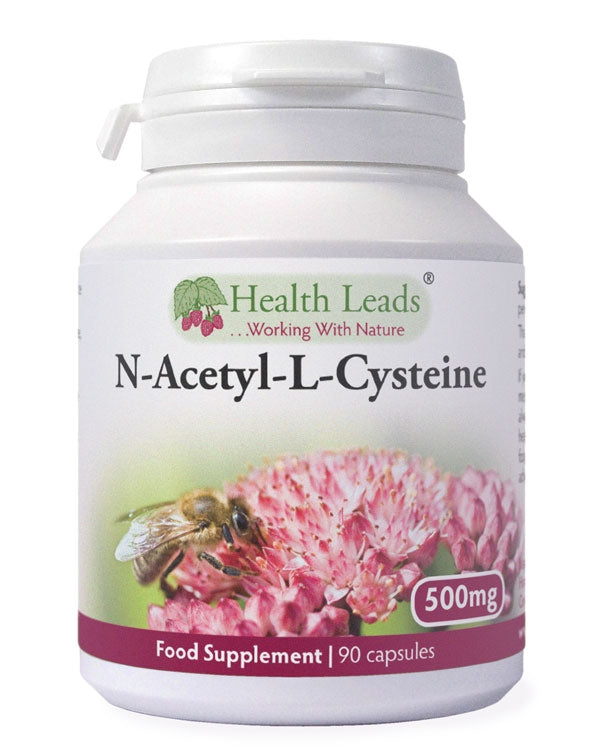
The suggested intake for Health Leads NAC is 1–2 capsules per day, providing 500mg–1000mg of N-Acetyl-L-Cysteine.
NAC is generally taken with food, though it can be taken without. Some people find that taking it on an empty stomach causes mild nausea — taking it with a meal resolves this in most cases.
NAC is commonly taken as part of a broader antioxidant stack. It pairs logically with Vitamin C, which works synergistically with glutathione in the body's antioxidant network — Vitamin C helps regenerate oxidised glutathione back to its active form. If you are supplementing with NAC for antioxidant support, ensuring adequate Vitamin C intake alongside it is a rational approach.
One important practical note: NAC should not be taken at the same time as activated charcoal or other adsorbing agents, which can bind to NAC and reduce its absorption.
Who Should Exercise Caution
- Anyone taking nitroglycerin or isosorbide (nitrate medications) — NAC can potentiate the vasodilatory effects of these drugs, causing significant drops in blood pressure. This is a clinically relevant interaction, not a theoretical one.
- Anyone taking blood-thinning medications — consult your doctor before supplementing with NAC
- Pregnant or breastfeeding women — seek professional advice before use
- Anyone with active peptic ulcers — NAC may cause gastrointestinal irritation in some individuals
- Anyone with cystinuria — a rare condition affecting cysteine metabolism — should not take NAC without medical supervision
If you are taking any prescription medication, check with your pharmacist before adding NAC to your routine.
What's in Health Leads NAC 500mg
Each capsule contains:
- N-Acetyl-L-Cysteine — 500mg
- Rice flour (small amount used as a capsule filling aid)
- Plant-source HPMC capsule shell
- Other ingredients: None
No magnesium stearate. No silicon dioxide. No artificial colours, sweeteners, or flow agents. Suitable for vegetarians and vegans.
The sulphur odour you'll notice on opening is a normal property of NAC — not an additive, not a quality issue, simply the nature of a sulphur-containing compound. It does not affect potency or safety.
Made in Wales by Health Leads, ISO accredited, additive-free since 1998.
The Bottom Line
NAC stands apart from most supplements because its mechanism is well-understood, its clinical applications are established, and the research base is genuinely substantial. The central case for taking it is clear: it's one of the most effective ways to support intracellular glutathione — the body's primary antioxidant — particularly where levels have been depleted by age, stress, alcohol, medication, or illness.
The mental health research is emerging and interesting but not yet conclusive. The liver and respiratory applications are better supported. As a general antioxidant precursor, the rationale is as solid as it gets in the supplement category.
The drug interactions are real and worth checking. The sulphur smell is normal and worth expecting. Everything else is straightforward.
Health Leads NAC 500mg — 500mg N-Acetyl-L-Cysteine per plant-source capsule. No magnesium stearate. No flow agents. No artificial additives. Vegan. 90 capsules. Made in Wales. ISO accredited. Additive-free since 1998. View product →